


The Minimalist Trap: When Clean Becomes Cold
Minimalism has long been the gold standard of high-end residential architecture. Expanses of polished concrete, floor-to-ceiling glass, and clean-lined timber cabinetry create a sense of serene, uncluttered luxury. When utilizing organic shaped rugs, designers find a deliberate tool to counter these rigid lines. Too often, however, interior spaces lean on standard rectangular layouts, which simply reinforce the exact same linear boundaries.
When every element in a room adheres strictly to the right angle, the eye quickly decodes the space as predictable. A standard rectangular area rug simply mirrors those rigid geometric frames.
To elevate a minimalist interior from standard to editorial, top interior designers rely on dynamic contrast. By introducing a custom, asymmetrical textile layout, you break the monotony of the grid. Shifting away from rigid geometry transforms the floor into a literal canvas for tactile art, injecting movement and sophisticated tension into a stark space.
The Power of Visual Tension: Shifting to Organic Shaped Rugs
In interior architecture, visual tension occurs when two opposing design elements are placed in juxtaposition. When everything in a room is fluid, the space lacks structure. Conversely, when everything is linear, the space lacks soul.
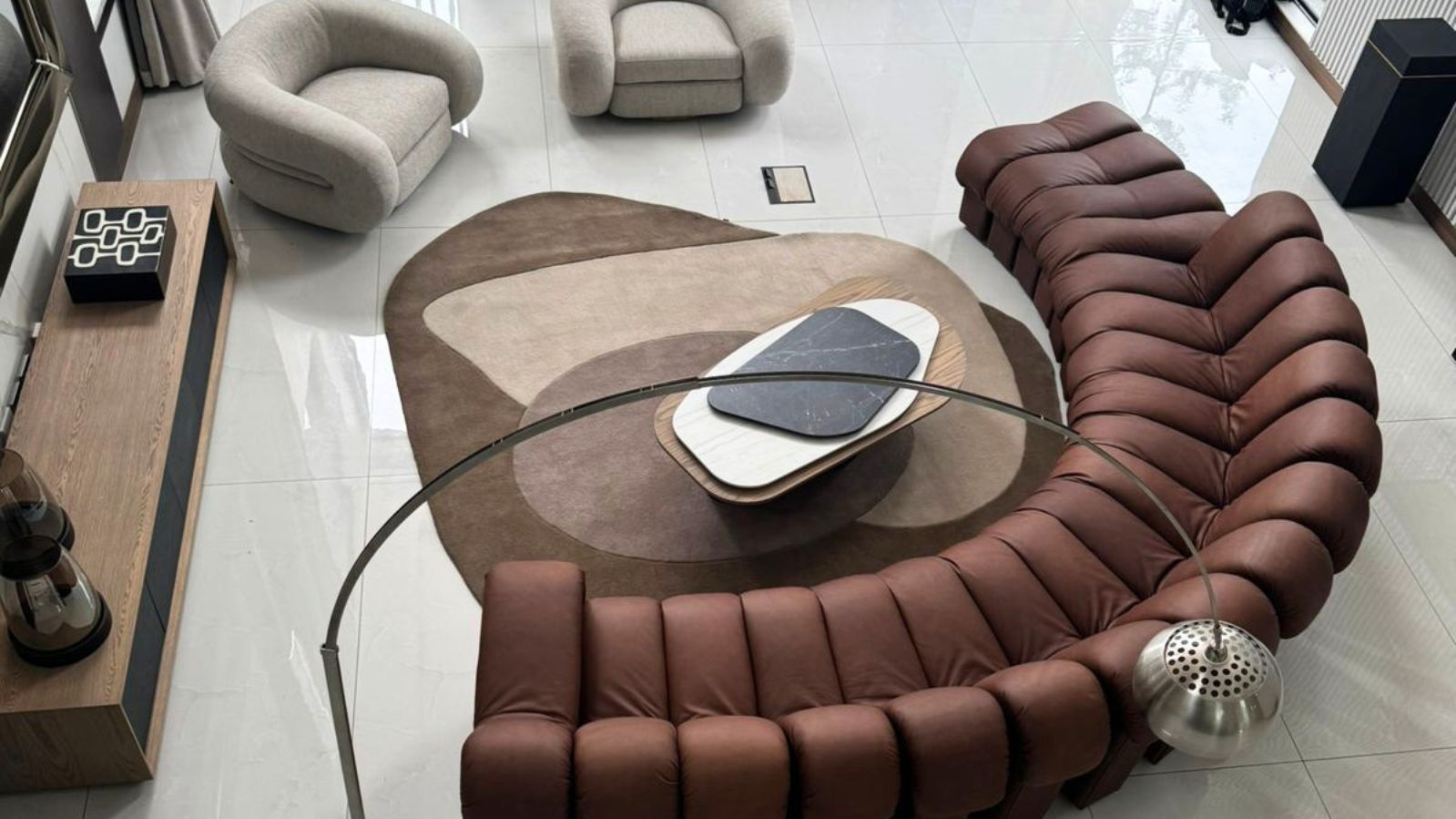
Integrating organic shaped rugs acts as the ultimate visual disruptor in a highly structured layout. When you slide an asymmetrical, fluid edge beneath a sharp, geometric stone coffee table or a low-profile block sofa, something incredible happens:
-
Juxtaposition: The straight edges of your furniture look sharper and more architectural because they sit against a fluid form.
-
Softening the Shell: The winding perimeter of the textile coaxes the eye away from the hard walls, immediately making a vast or stark room feel more welcoming and less confined.
Rather than competing with the minimalist aesthetic, the organic form highlights the clean lines of the architecture by providing a soft, natural counterpoint.
Tactile Depth: Designing with a Single Palette
True minimalism relies on subtlety. When designing organic shaped rugs for a minimalist home, you do not need to rely on loud patterns or jarring colors to make a statement. In fact, the unique silhouette itself does the heavy lifting.
Our studio highly recommends working with a refined, earth-toned or monochromatic palette. By keeping the color understated, the focus shifts entirely to the silhouette of the piece and its physical texture.
Using our signature premium weight of 5kg of yarn per square meter, a single-color organic piece gains incredible depth through the natural play of light and shadow along its fluid borders. The variations in pile density and the way light hits the hand-tufted wool-nylon matrix create a three-dimensional quality. The rug becomes a sculptural element on the floor, presenting quiet luxury at its finest.
Engineering the Fluid Edge on the Loom
While an organic shape looks effortlessly fluid on a mood board, executing it in manufacturing requires a highly disciplined technical process. Unlike a standard rectangle, a winding border constantly cuts across the bias of the canvas.
The Dynamics of the Tuft
To maintain absolute uniformity across an asymmetrical layout, our artisans modify their technique. While standard geometric designs follow a strict bottom-up path, a complex layout requires our team to dynamically shift and tuft in accordance with the fluid design lines. This specialized approach ensures that the pile flows naturally with the shape of the rug, enhancing the sense of organic movement.
Locking the Shape
To prevent the continuous, winding edges of an asymmetrical piece from warping, curling, or rippling over time, the rug must be stabilized under tension:
-
Latex Matrix: While firmly secured on the loom, we apply a first coat of specialized latex backing to lock the yarn.
-
Secondary Canvas: A high-quality secondary backing fabric is layered directly onto the wet latex.
-
Final Seal: A second layer of latex glue permanently bonds the layers together.
The textile then remains fully tensioned on the loom for roughly two days until it completely cures. This locks the structural memory into the flat canvas before it ever touches a floor, ensuring your custom silhouette stays perfectly flat.
The Hand-Finished Detail
The final transformation occurs in our finishing department. A winding, continuous organic edge cannot be mass-produced or finished on a standard binding machine.
Once the custom binding has been applied and has dried completely, our team trims the entire fluid perimeter completely by hand using scissors. While this hand-sculpting stage is incredibly time-consuming, it is the only way we can pay absolute attention to the changing curves of the design. It ensures every contour is pristine, the profile is beautifully clean, and the final textile rests flawlessly as a tailored architectural element in your home.
Step Beyond the Grid
Embracing organic shaped rugs allows you to honor the clean simplicity of your architecture while introducing a layer of soulful, artistic craftsmanship.
Explore our portfolio of custom installations to see how fluid textiles redefine minimalist spaces, or connect with our studio directly to arrange a complimentary design consultation.