


Floor Rug Bauhaus Style: Sculpting Minimalist Geometry into Tactile Art
The design world is experiencing a major structural shift. Specifically, modern interiors are moving away from cluttered spaces. Instead, designers favor striking, architectural silhouettes. Therefore, this classic design movement is having a massive resurgence underfoot. If you want to bring this iconic look into your home, a floor rug bauhaus style foundation is the perfect choice. It is the ultimate way to ground your entire space.
To understand its power, we must look at design history. Classic Bauhaus is highly celebrated for its industrial innovation. However, its most profound contribution to residential warmth happened in the textile studio. Led by visionary weavers like Anni Albers, the Bauhaus weaving workshop proved an important point. They showed that functional textiles could—and should—be treated as fine art.
1. Designing a Floor Rug Bauhaus Style: Asymmetry and Negative Space
Traditional rug design fills every square inch with dense patterns. In contrast, Bauhaus demands the exact elegance of restraint. Consequently, the main challenge is to make empty space feel completely intentional.
When drafting a design, we focus heavily on asymmetric balance. We use intersecting arcs, sharp grids, and clean diagonals. Therefore, a single offset line doesn’t just sit on the floor. Because of this strategic placement, it actively commands the entire room. As a result, it gives a floating minimalist furniture layout a clean, structural boundary.
-
Design Tip: For example, a large circular floor rug with a minimal accent works beautifully. It frames a seating arrangement perfectly without crowding the eye.
2. From String to Sculpture: The Alchemy of Carving and Pile Heights
A true Bauhaus rug should not rely on loud colors to get your attention. Instead, it relies on the physical play of light and shadow. To achieve this effect, the process shifts from standard weaving to a form of textile architecture. Specifically, we use two primary mechanics on our workshop floor.
-
Engineering the Matrix (Multi-Cut Pile Heights): First, we deliberately vary the settings on our tufting tools. This allows us to build the rug’s surface at different structural levels. For instance, a dense background can suddenly drop away into a low loop pile. Consequently, this variation creates an immediate, tactile topography underfoot.
-
The Sculptor’s Edge (Precision Hand-Carving): Next, the real artistry begins after the initial tufting is complete. The rug is flat-sheared first. After that, the artisan uses specialized carving shears. They manually cut V-shaped grooves directly into the dense wool pile. Of course, they follow the exact lines of the geometric blueprint.
As a result of this meticulous hand-carving, we create sharp, deep lines in the wool. Furthermore, these carved grooves interact beautifully with changing daylight. As daylight shifts across the room, the shadows inside the lines change constantly. Consequently, a dual-tone rug looks like a living architectural relief.
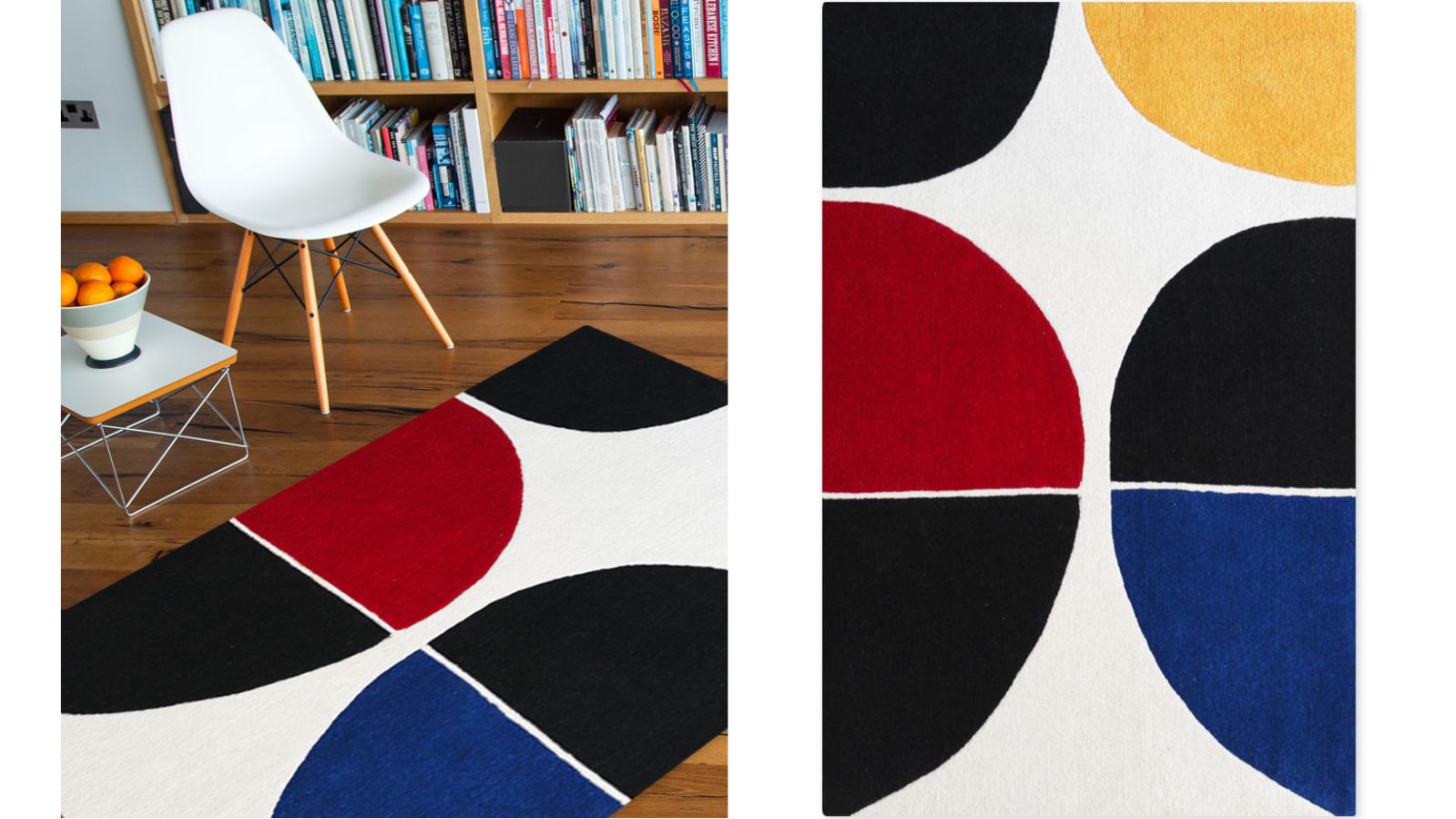
3. The Sensory Counterweight to Hard Materials
There is a brilliant design tension in modern minimalist spaces. For example, homes often feature hard surfaces like polished chrome, glass, and structured leather. While these materials look striking, an abundance of them can make a room feel cold. Therefore, you need a soft counterweight.
By utilizing a premium, high-density wool matrix, the rug completes the space functionally. In addition to adding comfort, it absorbs the echoes inherent in minimalist architecture. Ultimately, it provides the physical warmth that makes a house feel like a home.
Crafting Your Architectural Foundation
Bauhaus taught us an enduring lesson. Utility and high art should never be separated. In conclusion, a bespoke floor rug is the ultimate realization of that philosophy. It is a durable piece of flooring that doubles as a unique textile sculpture.
If you want to ground your next project with sharp geometric clarity, let’s build it from the floor up.