


Custom Hand-Tufted Rugs: What to Know Before You Invest in a Bespoke Design
Introduction
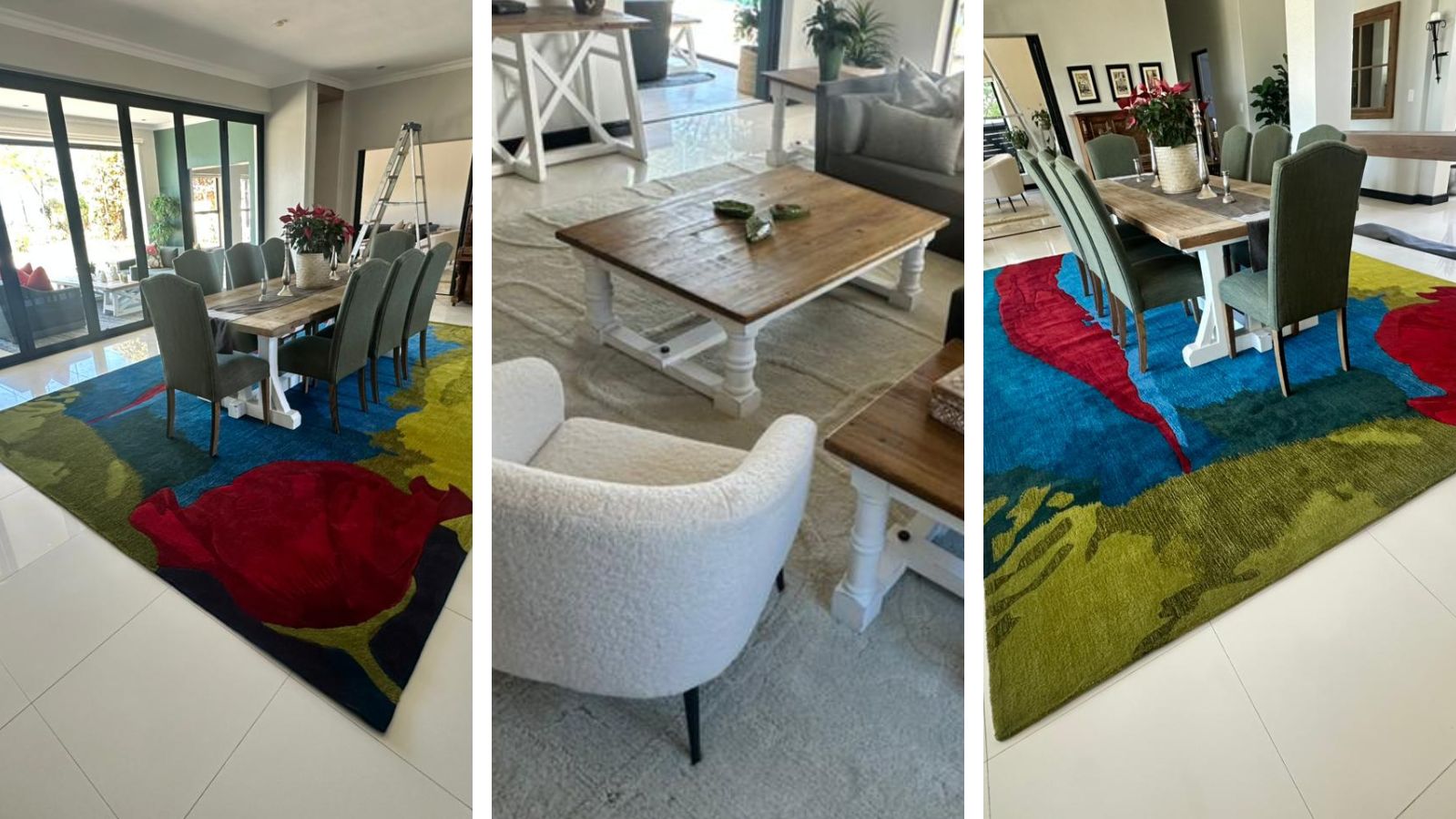
Custom hand-tufted rugs do more than cover a floor. Instead, custom hand-tufted rugs define space, add texture, and shape how a room feels. In both homes and commercial interiors, a well-designed custom hand-tufted rug anchors the space and strengthens the overall design concept.
Unlike ready-made options, custom rugs begin with a specific brief. Therefore, every decision, from size and colour to material and texture, directly shapes the final result.
When you understand how the process works, you make more informed design decisions and avoid costly mistakes.
What Is a Custom Hand-Tufted Rug?
A custom hand-tufted rug uses a hand-tufting gun to insert yarn through a stretched backing fabric. The artisan follows a design layout and builds the pattern by hand with precision and control.
As a result, this method offers strong flexibility in scale, colour, pattern, and texture, while still allowing efficient production.
You can customise:
- Dimensions and proportions
- Colour palette
- Pattern detail and complexity
- Pile height and surface texture
- Yarn type and material selection
In addition, each rug starts from scratch. Consequently, the design adapts to the space rather than forcing the space to adapt to the rug.
The Custom Rug Design Process Explained
A custom rug follows a structured production process. Each stage builds on the previous one, ensuring the final piece aligns with both the design intent and technical requirements.
1. Concept Development
The process begins with a concept. For example, you might provide:
- Reference images
- A mood or style direction
- A defined colour palette
- A floor plan or spatial layout
At this stage, the focus remains on clarity. In other words, the design team defines the visual direction and ensures it works within the space.
2. Design Translation and Refinement
Next, the concept moves into a technical design stage.
During this phase, the design gets adjusted for:
- Correct scale within the space
- Balanced proportions
- Yarn colour accuracy
- Structural suitability for tufting
However, digital designs often do not translate perfectly into textile form. Therefore, designers refine the artwork to ensure it performs well in real-life production.
As a result, the final rug reflects both the original vision and practical construction needs.
3. Tufting and Production
Once approved, production begins.
First, a backing fabric gets stretched tightly over a frame. Then, a skilled artisan uses a hand-tufting gun to insert yarn according to the design layout.
Meanwhile, the artisan carefully controls linework, density, and texture throughout the process. Consequently, subtle variations appear, which add depth and individuality to each rug.
4. Finishing and Completion
After tufting, the rug moves into finishing.
At this stage, the team:
- Trims the surface for consistency
- Carves details where the design requires depth
- Secures the backing for durability
- Checks quality before release
Finally, the finished rug is prepared for delivery and installation.
What Influences the Cost of a Custom Rug?
Several factors determine the cost of a custom rug. Therefore, pricing varies depending on both design and material choices.
Key factors include:
- Rug size
- Design complexity
- Number of colours
- Yarn quality and fibre type
- Pile height and density
- Level of finishing detail
In general, more complex designs take longer to produce. As a result, they require more skilled labour, which increases overall cost.
Who Should Consider a Custom Rug?
Custom rugs work best when standard options cannot achieve the desired design outcome.
For example, they suit:
- Homeowners who want a statement piece
- Interior designers working on bespoke projects
- Hotels, restaurants, and hospitality spaces
- Offices and branded environments
In these contexts, the rug becomes part of the architecture rather than a standalone accessory. Ultimately, it supports the overall design language of the space.
Why Choose a Custom Hand-Tufted Rug?
Custom hand-tufted rugs combine flexibility with craftsmanship. In addition, they allow complete control over both design and material choices.
Key benefits include:
- Precise sizing for any space
- Full control over design and colour
- Ability to translate detailed artwork into textile form
- Hand-finished texture and depth
- High-quality material selection
Therefore, these rugs often become focal points within interior spaces.
Final Thoughts
A custom hand-tufted rug requires thoughtful planning and a clear design direction. Overall, when you understand the process, you make stronger decisions and achieve better results.
Furthermore, when skilled makers guide production, the final piece reflects both design intent and craftsmanship.
Call to Action
If you want to create a custom rug, start by defining your concept. Then, get in touch to develop a design that fits your space and brings your idea to life.