


The Designer Trick You’re Not Using Yet
If you’ve ever stood in the middle of a small living room, studio apartment, or awkward corner, wondering how to ground the space without making it feel even tighter, you’re not alone. Small spaces are notoriously tricky to decorate. Everything needs to work harder – the furniture, the lighting, the layout, and especially the flooring. That’s where the designer-approved secret comes in: round rugs.
Most homeowners default to rectangular rugs because they feel “safe,” but interior designers have been using round rugs for years to open up tight spaces, soften harsh angles, and create visual breathing room.
If you’ve been wondering when to use round rugs in small spaces, this guide breaks down exactly why they work, where they work best, and how to choose the right size and placement for maximum impact.
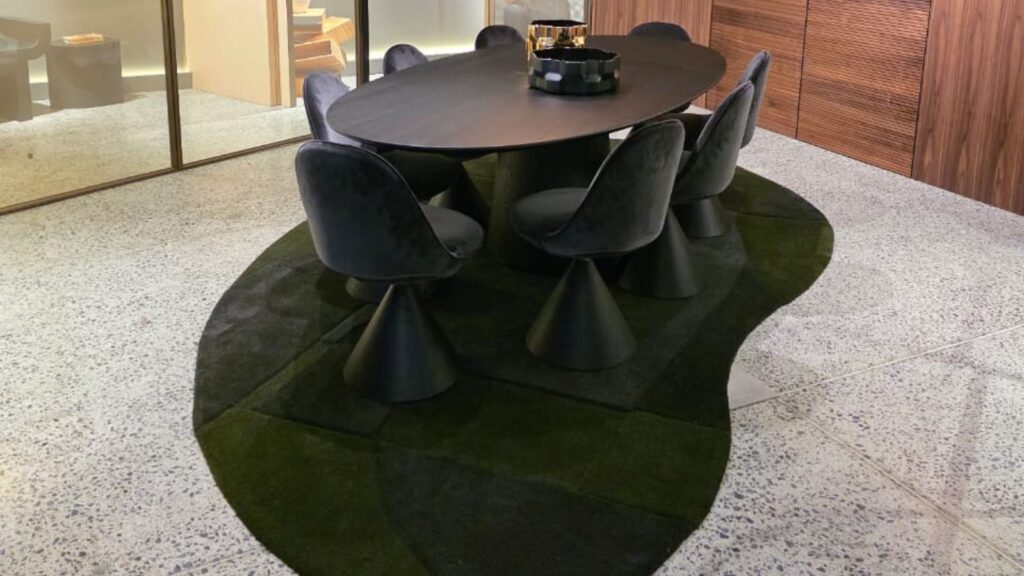
Why Round Rugs Work So Well in Small Spaces
Round rugs do something unique – something rectangular rugs simply cannot achieve.
1. They Create Flow Instead of Visual Blockage
Rectangle rugs create edges and borders. In a small room, borders can make the space feel boxed in or chopped up.
Round rugs eliminate those harsh edges, creating visual movement that makes the room feel more open.
Round rugs eliminate those harsh edges, creating visual movement that makes the room feel more open.
2. They Soften Corners and Tight Layouts
Small rooms usually have:
- Lots of corners
- sharp architectural lines
- busy furniture arrangements
A round rug instantly softens the room and makes it feel less rigid and more relaxed.
3. They Make Rooms Feel Bigger — Yes, Really
Because round rugs draw the eye inward and around, they create the illusion of more room.
This is especially effective when furniture is arranged around the rug instead of on all four sides.
This is especially effective when furniture is arranged around the rug instead of on all four sides.
4. They Add a “Focal Moment” Without Taking Up More Space
Round rugs naturally become a focal point.
In a small room, adding a focal point can help distract from the limited square footage.
In a small room, adding a focal point can help distract from the limited square footage.
When to Use Round Rugs in Small Living Rooms
A small living room can feel cramped if everything pushes against the walls. A round rug helps:
Use a Round Rug When…
- Your sofa sits in a corner.
- Your coffee table feels too “boxy.”
- The room has an awkward layout.
- You want to create a conversational area.
- The room feels smaller when you add rectangular furniture.
Best Placement Tips
- Center the round rug under the coffee table
- Allow the front legs of the sofa and chairs to rest slightly on the rug.
- Don’t push the rug right up against the walls – leave a border to create space.
Best Rug Size
For small living rooms:
- 120–150cm round rug under a small coffee table
- 150–180cm for a slightly larger seating arrangement
When to Use Round Rugs in Bedrooms (Especially Small Ones)
Small bedrooms often feel cramped by rectangular rugs, especially if the bed is pressed into a corner.
Use a Round Rug When…
- The bed is placed off-center or into a corner.
- You want a softer, more romantic, or cozy look.
- A rectangular rug looks too large or awkward.
- You need a rug that fits under a bedside table or reading chair.
Placement Ideas
- Place the round rug halfway under the bed.
- Place it entirely beside the bed for a soft landing spot.
- Use it under a chair in a reading nook.
- Place it under a floating desk in small studio apartments.
Best Rug Size
- Around 150–180cm round rug for a single or double bed
- 180–200cm for a queen-sized bed when used on the side
When to Use Round Rugs in Small Dining Areas
Dining rooms in small apartments are notoriously tricky. A round rug can make a tight area feel intentional instead of cramped.
Use a Round Rug When…
- You have a round dining table (the most obvious choice!)
- Your dining table is centered in an open-plan space.
- You want to define the dining zone.
- The room has limited walking space around the table.
Sizing Tip (Most Important!)
Choose a rug that extends at least 60–70cm beyond the edge of the table so chairs can be pulled out without catching.
Best Rug Size
- For 2–4 seat dining tables: 180cm
- For 4–6 seat tables: 200–220cm
When to Use Round Rugs in Small Entryways and Hallways
Entryways are usually the smallest space in a home — and also the most under-decorated.
A round rug can instantly make a tiny entryway feel like a thoughtful, styled “welcome moment.”
Use a Round Rug When…
- Your entryway is narrow or long.
- The space lacks personality.
- You want to break up a hallway full of straight lines.
- A rectangular runner feels too boring.
Placement Tips
- Center the rug under a console table.
- Use it to create a “pause point” in a long hallway.
- Pair with a mirror or coat rack to create a styled vignette.
Best Rug Size
Entryway go-to: 120–150cm
When to Use Round Rugs to Create Zones in Small Open-Plan Spaces
Studio apartments or open-plan living areas often need “zones” to separate:
- living
- sleeping
- working
- dining
Round rugs are perfect for zoning because they are visually distinct.
Use a Round Rug to Create Zones When…
- You want to define a reading chair area.
- You have a desk that you want separated from the living room.
- You want a visual break between the bed and the living space.
- The space feels like one undefined blob.
Round rugs help segment the room without adding walls or bulky furniture.
When Not to Use Round Rugs in Small Spaces
Round rugs are magical – but not everywhere.
Avoid round rugs when:
- The room is very long and narrow (rectangular is better)
- Furniture needs to sit fully on the rug (rectangles are easier)
- A room has too many other circles (lamps, tables, décor)
- The space is extremely cluttered.
- The circular shape competes with strong architectural lines.
A good rule: If the room already has a strong anchor, don’t introduce a competing focal point.
Designer Tips: How to Style Round Rugs Perfectly
1. Keep furniture partially on the rug
This anchors the rug without overwhelming the space.
2. Match the size to the item it sits under
Small rug under huge sofa = no.
Small rug under a small reading chair = perfect.
Small rug under a small reading chair = perfect.
3. Use colour and pattern intentionally
In small rooms:
- lighter rugs = more space
- Subtle patterns = less visual noise
- Bold patterns = great for creating a focal point
4. Don’t be afraid of layering
Round rug on top of a larger rectangular rug?
Yes – it works beautifully in small apartments.
Yes – it works beautifully in small apartments.
5. Float the rug away from the walls
Leaving visible floor space around the rug creates an illusion of openness.
FAQ: “When to Use Round Rugs in Small Spaces?”
Do round rugs make small rooms look bigger?
Yes – because they create visual movement and soften harsh lines.
Can I use a round rug under a sofa?
Yes. Place the front legs on the edge of the rug for the best balance.
What shape rug makes a room feel bigger?
Round rugs in small or awkward rooms; rectangles in long, narrow rooms.
Are round rugs good for living rooms?
Absolutely, especially when you want to break up the straight lines of sofas and TV units.
Can you put a round rug under a bed?
Yes — especially effective for beds pushed into corners or smaller rooms.
If you want more information about circular rugs, get in touch with us and we will gladly assist.