


Best Rugs for High-Traffic Areas: A Studio Guide to Commercial Durability
Choosing the best rugs for high-traffic areas requires more than simply selecting a heavy yarn. When commissioning a hand-tufted piece for a busy boutique hotel lobby, a fine dining restaurant, or a bustling luxury residential corridor, the rug must be constructed to withstand daily friction while maintaining its dense, artisanal finish.
In this guide, we detail the specific materials, yarn blends, and manufacturing techniques required to produce a long-lasting, bespoke rug for heavy-use environments.
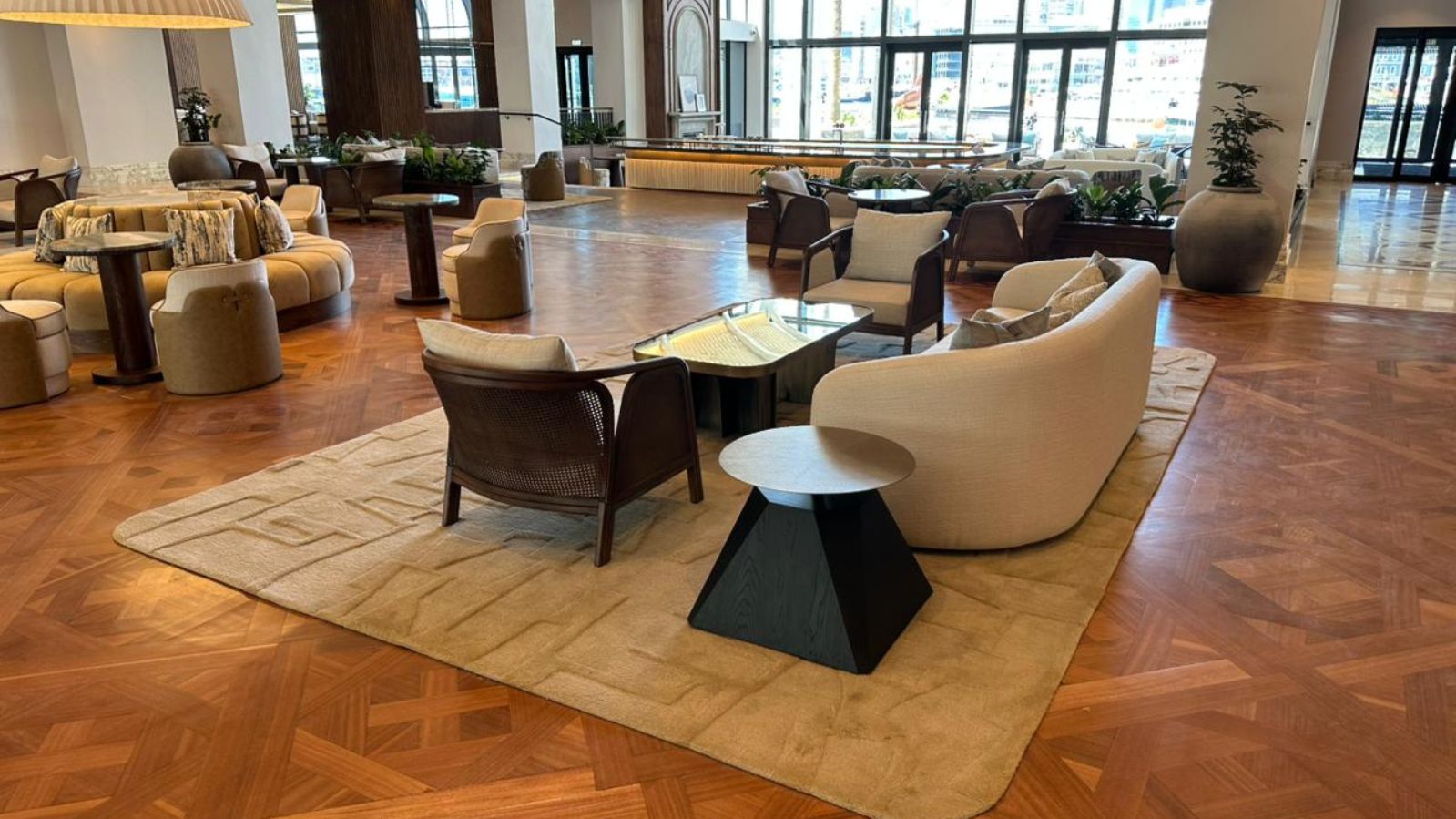
The Studio Standard: 80% Wool and 20% Nylon
For commercial and high-end residential projects, relying on a single fibre type often falls short of durability requirements. To build a rug that withstands constant use, our studio constructs high-traffic pieces using a premium blend of 80% wool and 20% nylon.
This specific yarn composition is the standard for luxury hospitality projects. The wool provides the rich, tactile quality and deep colour absorption expected of a bespoke piece, while the 20% nylon acts as a structural anchor. This synthetic addition prevents the pile from crushing under heavy footfall, ensuring the rug retains its shape and density over time.
Choosing Colours and Designs That Hide Wear
In a commercial space or a busy home, the rug will face inevitable foot traffic. While the 80/20 wool-nylon blend provides the structural integrity, your design choices can further extend the practical life of the piece:
- Curated Palettes: Deep, saturated tones disguise wear naturally. For 2026, rich rust and burnt orange are heavily featured in high-end interiors, offering both striking warmth and excellent soil-hiding properties.
- Pattern Over Plains: A solid, flat colour will highlight marks much faster than a textured or patterned design. Incorporating multiple tones or subtle shifts in the design helps the rug conceal daily wear.
The Built-in Stability of Our Latex Backing
When commissioning a high-end piece, the foundation should be as meticulously crafted as the surface. We finish our bespoke hand-tufted rugs with a premium latex backing that inherently provides a secure, non-slip grip on hard floors. This built-in stability makes an additional underlay entirely optional. While you may add a pad for an extra layer of plush cushioning underfoot, your piece will remain safely anchored in a high-traffic environment without one.
How to Maintain Hand-Tufted Rugs in High-Traffic Areas
Even the most robustly constructed rugs require proper care to extend their lifespan in a busy environment:
- Suction-Only Vacuuming: Vacuum regularly using a suction-only setting. Avoid rotary brush bars, which can aggressively pull and fray the wool fibres.
- Rotate the Piece: Turn the rug every few months to ensure the pile wears evenly across the main walkways.
- Blot, Never Rub: Treat spills immediately by blotting the area with a clean, dry cloth to protect the yarn structure from unravelling.
FAQs
What type of rug is best for high-traffic areas?
Tightly packed, hand-tufted rugs manufactured from an 80% wool and 20% nylon blend are the superior choice for commercial and luxury residential longevity.
What pile height is best for high-traffic areas?
A dense, single-level, low-pile is highly recommended. It resists flattening under heavy furniture and constant foot traffic much better than a plush, multi-level, or carved pile.
How do you protect bespoke rugs in high-traffic areas?
Rotate the piece regularly to distribute footfall evenly across the main walkways, and rely strictly on professional cleaning services for deep maintenance. Because our hand-tufted pieces feature a premium non-slip latex backing, an additional rug pad is entirely optional and only necessary if you prefer a softer, cushioned feel underfoot.